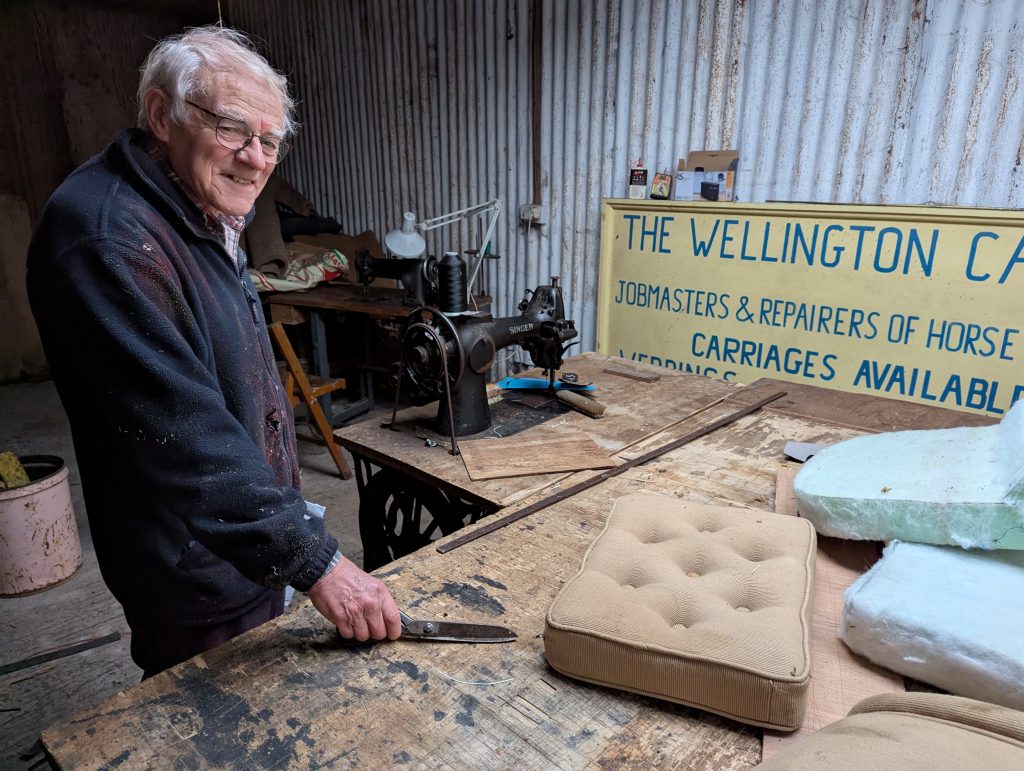
The Resurrection of the Wheel: Sixty Years of The Wellington Carriage Company
By Lester Dagge AIAT Judge
For over sixty years, the life of Philip Holder has been measured in the scent of steam-bent ash, the tack of fresh coach paint, and the steady rhythm of a wheelwright’s hammer. His journey into the world of carriage restoration didn’t begin in a grand showroom, but in a hedgerow.
He was little more than a lad when his father rescued a Brougham tangled with brambles in a hedgerow. It was a sorry sight: the front wheels were gone, the timber was soft with rot, the ironwork was a mask of rust, and the interior cloth had long ago been surrendered to the mice. Yet, in that skeletal frame, he saw a masterpiece waiting to return.
Philip set to work with a singular focus, sparing no effort to source authentic materials to reproduce every broken part. It was a baptism by fire that forced him to master the delicate arts of interior trimming and the steady-handed discipline of hand-lining and coach painting.
The Vanishing Art
Even six decades ago, wheelwrights were a vanishing breed. He was fortunate to enlist the help of two semi-retired masters of the craft. I watched them with the intensity of an apprentice from a bygone era. When they finally laid down their tools for good, He found that through years of observation and practice, he was ready to pick his own up. By the age of twenty-five, he had become proficient in the many-faceted soul of the carriage.
In those early days, he was among a small handful of people in the UK dedicated to reviving an art form that had virtually breathed its last. He established his business as The Wellington Carriage Company—named for our local market town, now part of Telford, rather than Wellington – the ‘Iron Duke.’
The Era of the “Barn Find”
This was an era before the arrival of modern steel vehicles or European imports. It was the golden age of the “barn find.” As the driving world began to stir again, long-neglected carriages were pulled from the dust of decades.
Owners often had the spirit to tackle minor repairs, but the complex geometry of wheels and shafts remained a mystery to most. He soon found his business at the heart of this revival, specializing in the repair and rebuilding of wooden wheels. He engineered his own equipment to produce steam-bent ash shafts, supplying them as undressed blanks for DIY enthusiasts or as fully finished pieces.
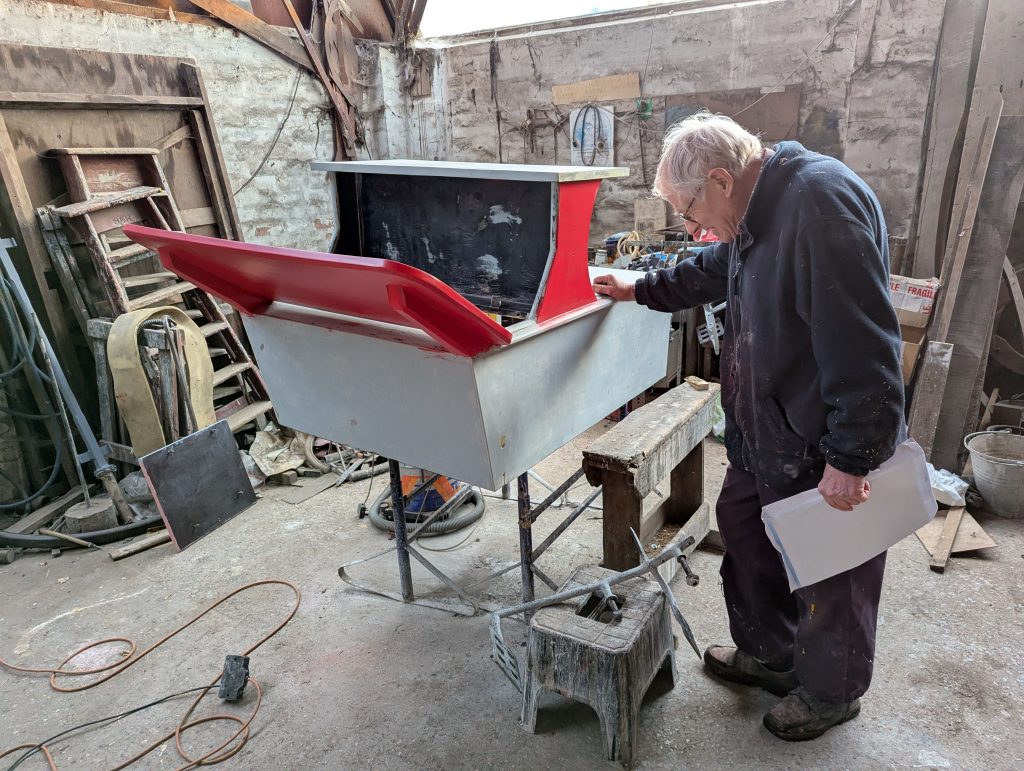
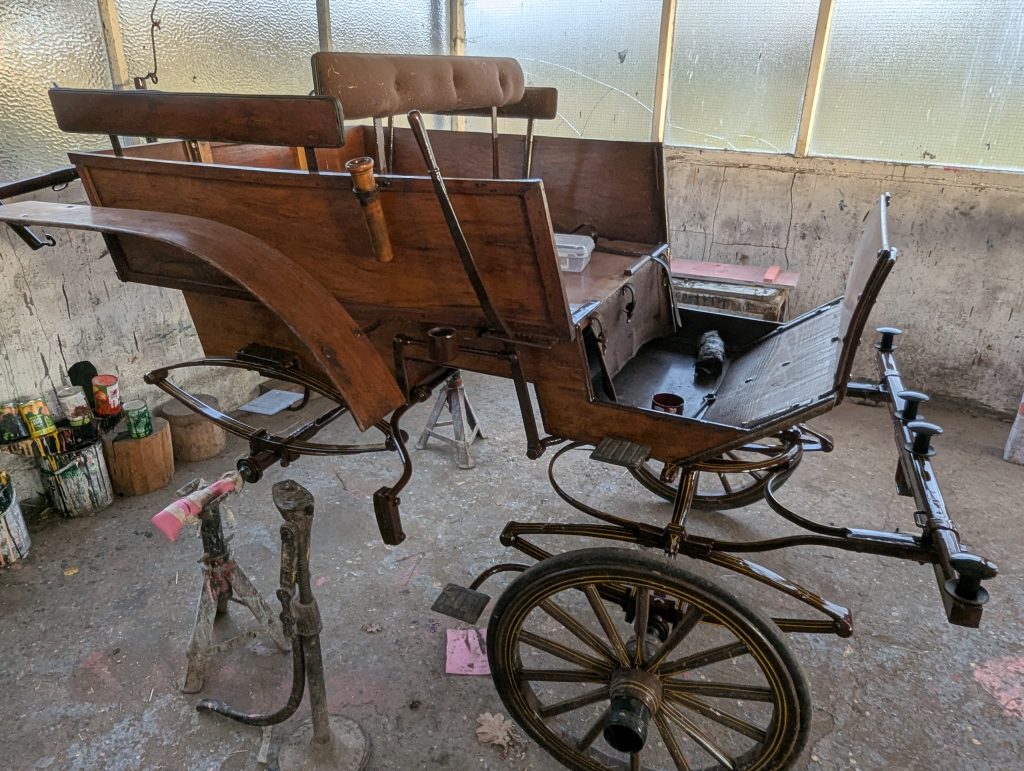
A full refurbishment in his workshop was a labour of love. It was a process of total immersion: dismantling every bolt, stripping away crazed paint, and building the surface back up with primer and filler. The final finish—achieved through countless hours of hand-flatting and skilled brushwork—was a mirror to the past. From hand-stitched patent leather mudflaps to the exacting tension of a leather hood, no detail was too small.
A Lasting Legacy
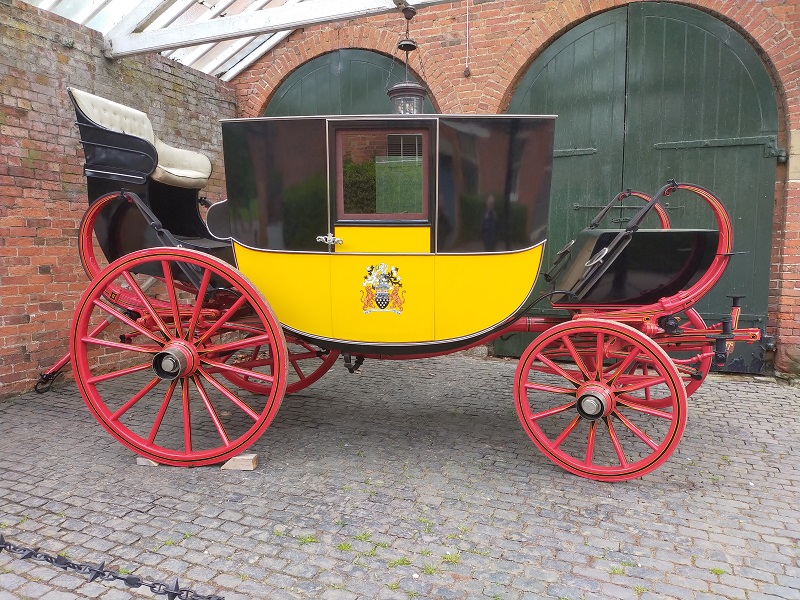
Over the years, his workshop has breathed life into thirty completely new traditional carriages. While he occasionally utilized reclaimed ironwork, many were built from the ground up—primarily gigs for small ponies, but also several grand four-wheeled vehicles. While he outsourced the forging of springs and axles to specialist craftsmen, every piece was guided by his own full-size technical drawings.
This dedication to the “old ways” did not go unnoticed. In 2001, Philip was honoured to be invited as a Yeoman of the Worshipful Company of Wheelwrights. In the City of London’s ancient livery system, a Yeoman of the Worshipful Company of Wheelwrights is a distinguished title reserved for working wheelwrights who have been formally recognized by the Company for their exceptional skill and “depth of expertise” in the craft. Philip also received the prestigious Countryside Alliance Best Traditional Business Award in 2008 and the Coach Makers Annual Award in 2010 in recognition of his achievements.
The Journey Continues
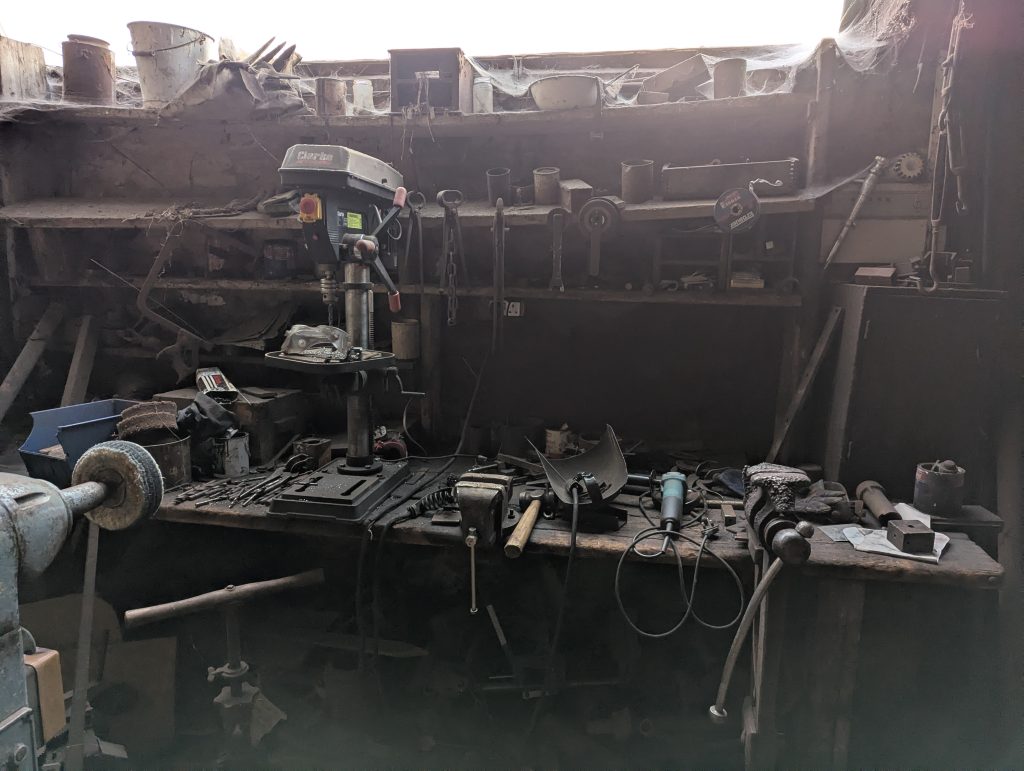
After a lifetime spent in the trade and now enjoying life into his 80’s, the fire hasn’t gone out. Though he has scaled back, he still finds himself working in his workshop, a direct hark back to Victorian manufacturing restoring smaller carriages and ensuring the craft lives on. And on those days when the shop is quiet, he still finds time to enjoy his greatest pleasure exactly where this all began: behind his own horses and carriage, feeling the familiar pull of a carriage on the open road.
You can learn more about Philip and the Wellington Carriage Company here: www.wellingtoncarriagecompany.co.uk