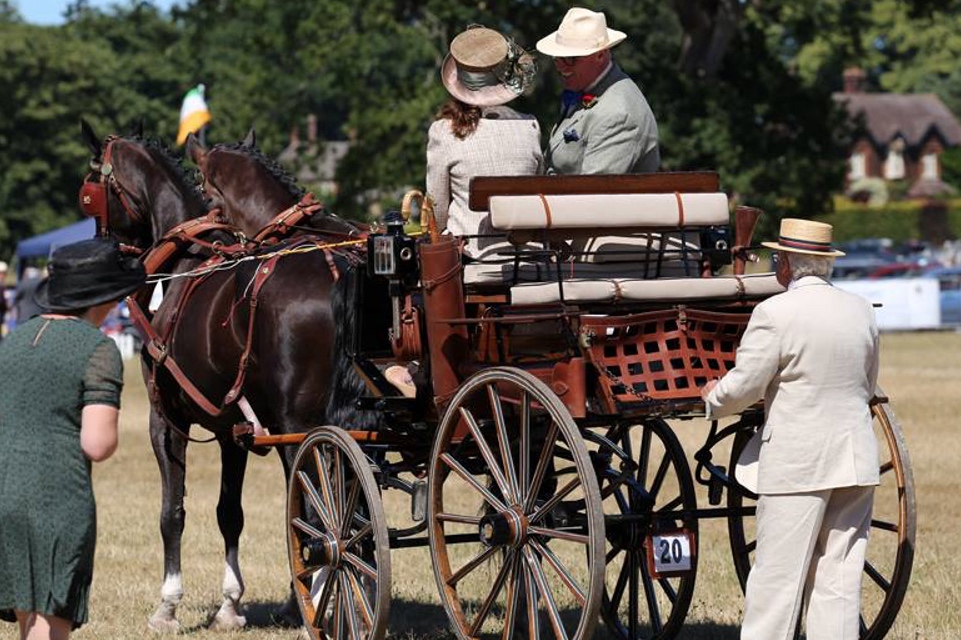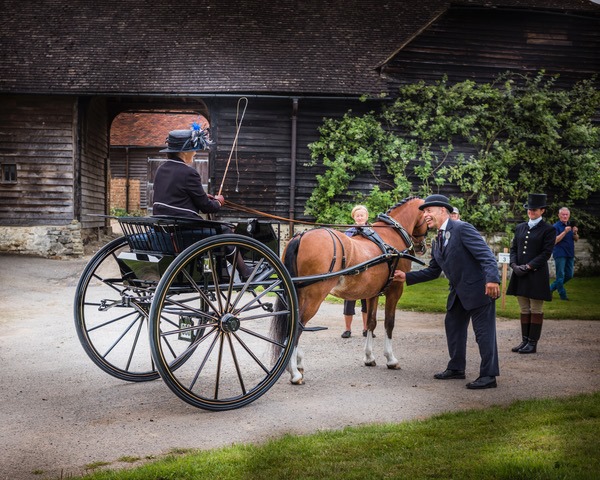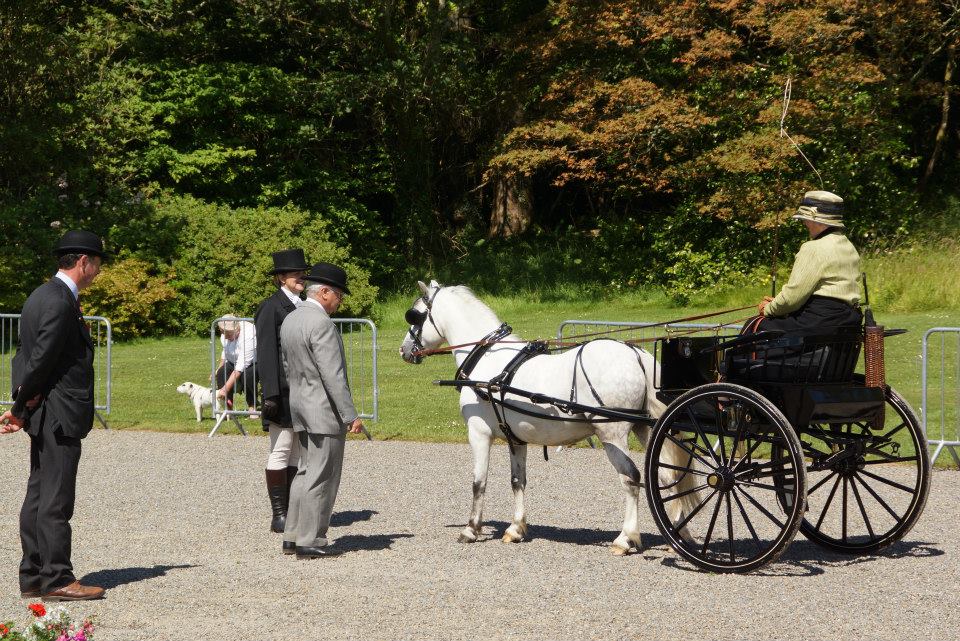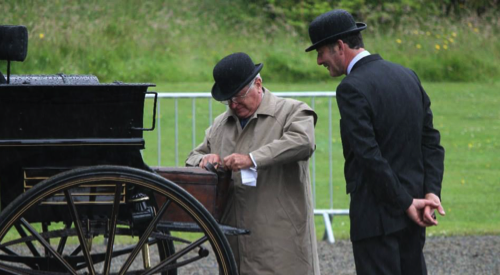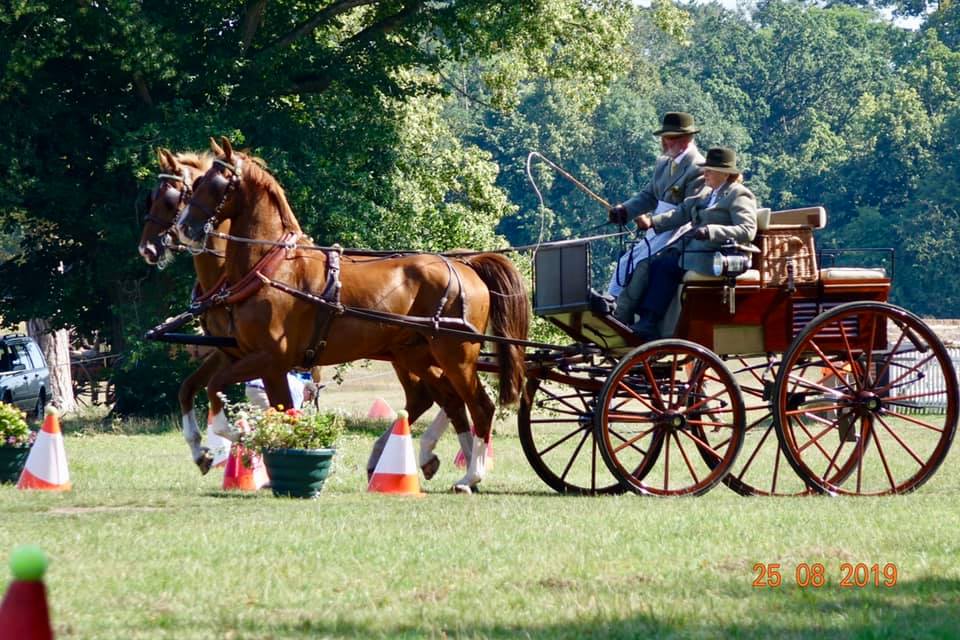
ATTELAGE DE TRADITION
With its origins founded in France by Baron Christian de Langlade, competitors have the reassurance that all CIAT Attelage de Tradition International events will conform and operate within the regulations set down by the AIAT . The guidelines are simple and easy to negotiate.
The competition is run over three stages and conform to the following regulations.
Individual turnouts are judged at allocated time slots in three separate locations by AIAT Approved judges.
You will be closely inspected by the individual judge where you will be scored for overall impression, the condition of the horse, the carriage, the harness and the passengers. You will be expected to present a turnout that is correct as possible for your equipage including fitting of harness, appropriate carriage, fit and passengers attire.
The following is a typical AIAT score sheet, all competitors will be issued with a copy after the competition has finished.
Please note, this presentation sheet cannot be copied and used for any other event other than a bona fide AIAT competition.

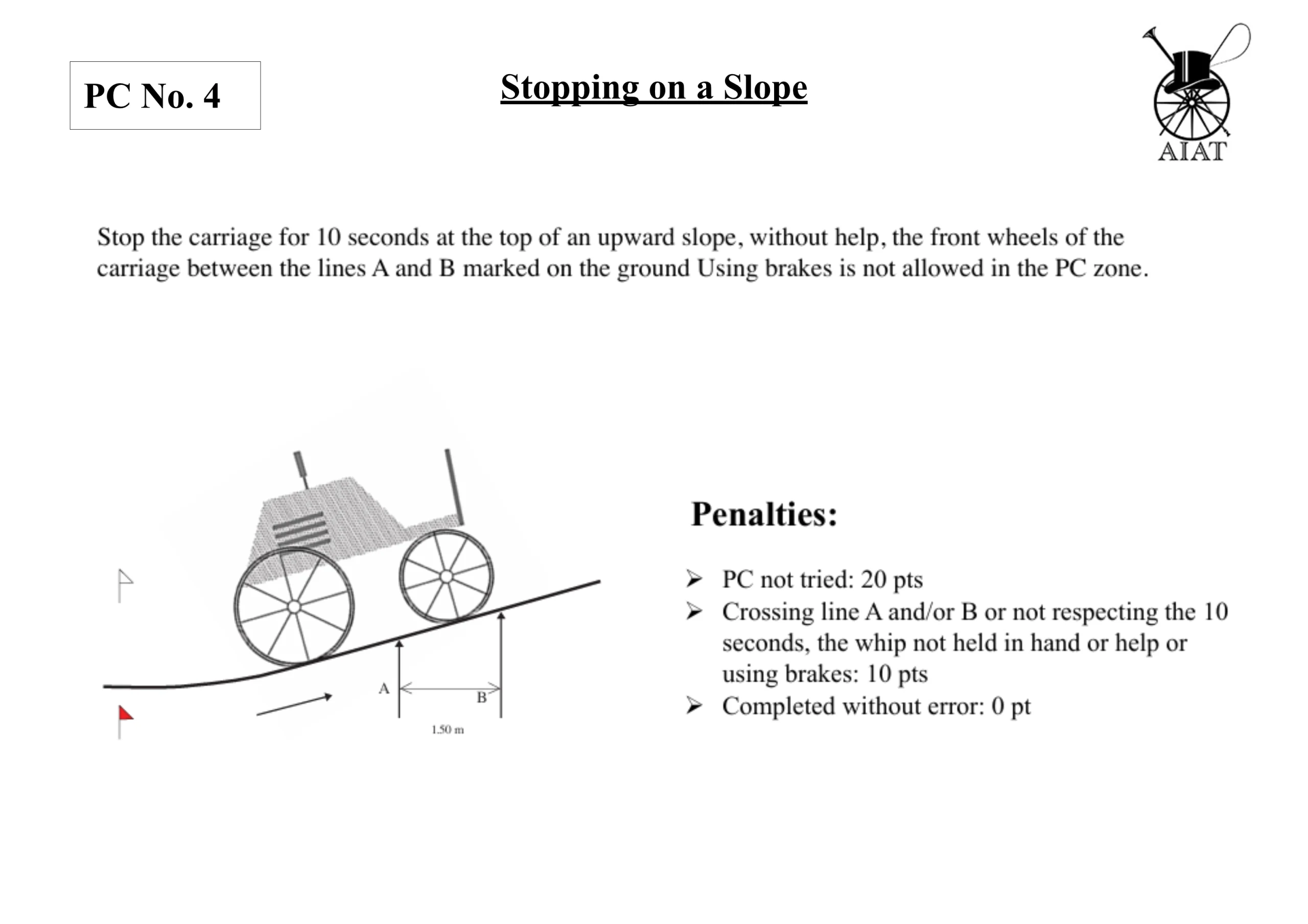
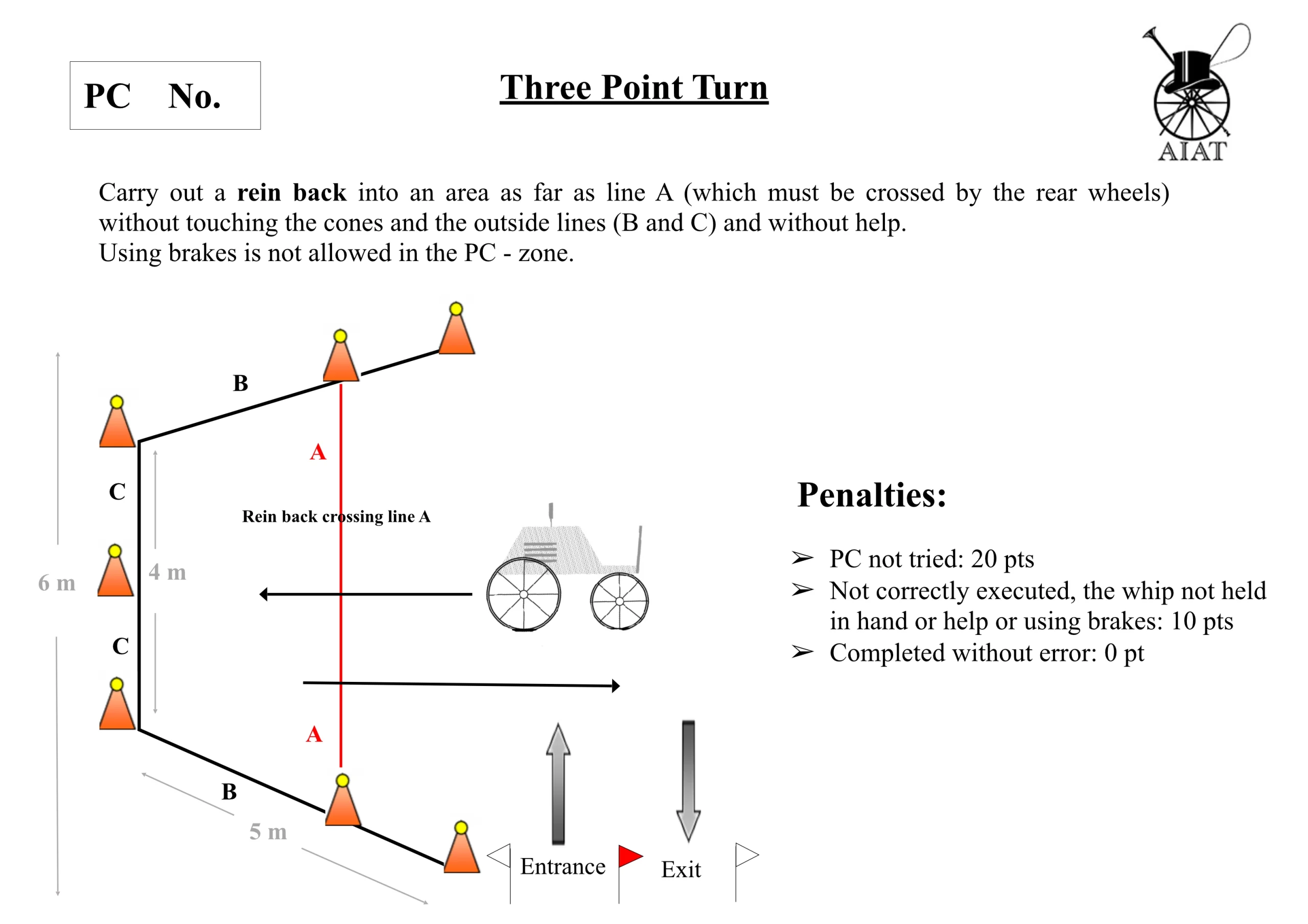
The second stage of the competition is the Routier (Road Drive) which encounters difficulties contained within marked controlled passages (PC’s) which you could expect to negotiate as part of any typical carriage journey. All Passage Contrôlé (PC’s) -with the exception of the ‘Stop on a slope’ must be situated on flat surfaces that allows plenty of space on each side for eventual mishaps. When necessary, trace marks on the ground with plaster or paint to may be used indicate their format.
Turnouts blocked at the entry of a PC should be timed for proper scoring (deduction of the delay).
Entries and exits of each PC are indicated by flags (red on the right, white on the left) defining its zone.
A penalty of 10 points is imposed for any material destruction of a PC before, during and after performing the imposed exercise.
The use of brakes is forbidden in the PC zone or will cause a 10 points penalty. Official corridors width is 2,20 meters or 2,70 m for 3 horses abreast.
4 minutes is the maximum time allowed for completing each PC.
The final stage of the event is where competitors will be expected to negotiate a series of cones (Maniabilité) with balls mounted to determine if you hit the cone. This stage of the event is to test the drivers precision skills. The cones course is expected to be driven in a gently flowing manner against an optimum time. Cone widths are changed to suit the width of the individual competitors carriage, varying from narrow Donkey carts to wider Road Coaches. Depending on prevailing conditions, the number of cones will be set by the individual event organiser, but is normally around 20 gates. Penalties will be issued for balls down and time penalties for times under or over the allocated time. On completion of the cones course the competitors scores are gathered, calculated and tabulated to determine the individual category winner.
After a short break to allow for the score keepers to update their records, all competitors are expected to return for the gala parade and prize giving.
Updated March 2026
The object of these competitions is to maintain the art of traditional driving, using original traditional carriages (built before 1945), to develop it’s image and help the lovers of this sport to improve their skills.
The competitions has three phases:
REQUIREMENTS
The driver’s age for participation in the (CAT) or (CIAT) tournament is at least 12 years. If the participant is a minor (under -16 years old), he or she must be accompanied by an adult. Participation in the competition will only be confirmed after paying the entry fee. The application must include valid documents entitling you to participate in the driving competition and proof of personal accident insurance, as well as mandatory insurance for the animal breeder, which covers carriage driving. Only horses, ponies, mules or donkeys that have the appropriate vaccinations are allowed to compete. If these documents are not presented, the start permit cannot be issued. A heavy draft horse can only be included in the category of a warm-blooded animal, if it remains in the warm-blooded animal category for the entire season. In the category of heavy draft horses, only horses that have been inscribed in a national studbook of heavy horses can compete.
JUDGING
The jury consists of the president and one to two AIAT judges. They guarantee the correct application of the regulations. Only the presiding judge may exclude a turnout if he considers that there is a potential danger due to the horse’s stressed or bad behaviour, the driver lacks practice in leading, or the harness or carriage poses a safety risk. The veterinarian may only provide information to the president of the jury.
CARRIAGES
Carriages are rated on a scale of 20 points. Historical vehicles (before 1945) have a coefficient 3, and vehicles made after 1945 have a coefficient 1. The starting number of each carriage taking part in the competition should be mounted in a visible place. A participant who provides false data about his carriage in the application will be disqualified.
Phases
The same driver should drive all parts of the tournament or they will be disqualified.
Turnouts must have a minimum number of grooms (in livery or appropriate clothing):
Neither the horses, nor the number of grooms, nor the carriages and harnesses may be changed during the three parts of the competition. Each necessary change is penalised with 20 points.
The driver and passenger may change their clothes during the three parts of the competition only in heavy rain. Otherwise, 10 penalty points are added.
The number of passengers is arbitrary.
The whip, which is adapted to the type of vehicle (with a long or short reins), must be held in hand in all three phases.
The whip that is not held in the hand or that is not adapted to the team or tandem, will be penalised 10 points.
Participation in the decoration of the winners is mandatory. Exceptions arising from a higher necessity must be approved by the main judge.
Any outside assistance during the three parts of competitions will be penalized 20 points.
1. Presentation
Each turnout is judged in a standing position, one by one by each judge on the presentation form.
During the Presentation, protectors, bandages, boots and any other type of leg protection are prohibited (10 penalty points).
Any participant who shows up late for the presentation or on the Routier (on the second stage) will receive 5 penalty points.
The vehicle may have the brake applied during the judges assessment.
When approaching judges, grooms may walk alongside the vehicle.
2. Routier
Routier competition requires sufficient knowledge and ability to drive a carriage under normal conditions.
The route is set in such a way that any type of horse-drawn vehicle can cover it without problems. The distance should be between 13 kms and 17 kms and less than 9 km for donkeys. The driver drives at his own risk and must comply with the generally applicable traffic regulations at all times.
Maximum speeds are:
The technical delegate is the only one who can lower these speeds due to specific topographical conditions or prevailing conditions, but must inform the jury about it.
The permissible time has a margin of +/- of one minute. Each second more or less will be penalised with 0.2 penalty points. For example: official time = 65 min. Allowed time = between 64 and 66 min. Each second above or below the allowed time = 0.2 penalty points.
There are a maximum of 5 natural or artificial obstacles (PC) from AIAT list of obstacles. The last obstacle should be at least 300 meters from the finish line. A carriage that stops or will make a volte in the last 300 meters will receive 5 penalty points.
A driver will be disqualified if he passes any obstacle or any gate on kegels before the start of any phase of the competition.
The use of brakes in obstacles is punished with 10 penalty points. Each destruction of an obstacle during or after the attempt means 10 penalty points. Obstacles must be crossed in one go.
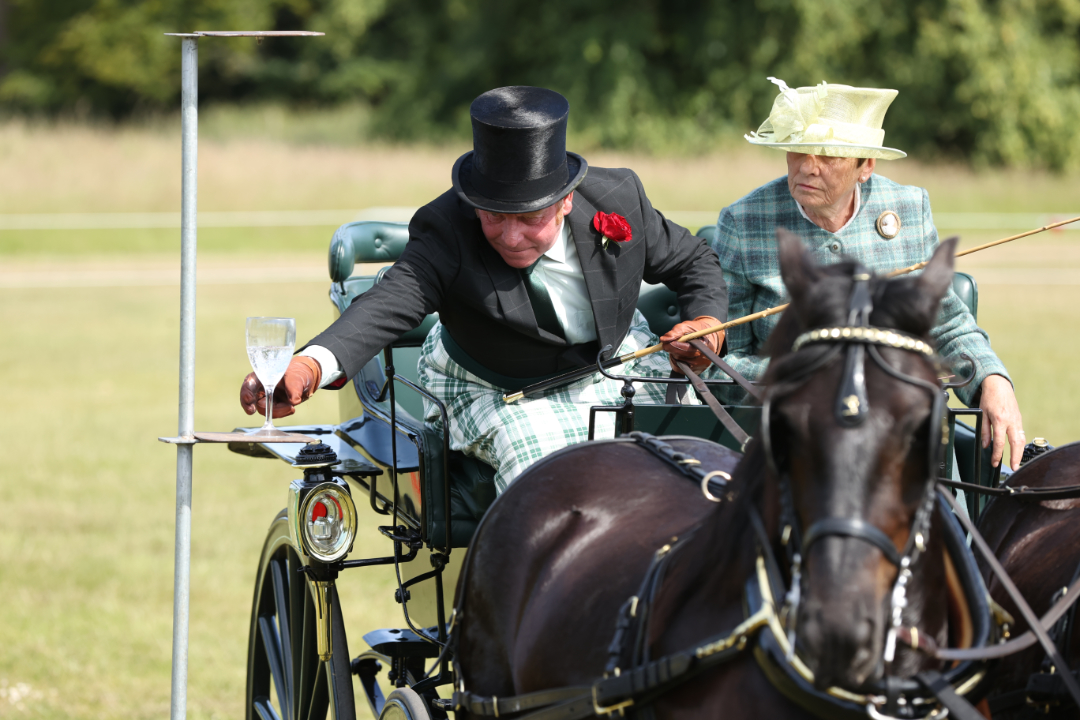
Example: the volt should be smoothly made in a closed circle with whip in the outstretched right hand, the obstacle with the glass must be smoothly crossed directly between A and B.
3. Cone driving
The Cone driving competition is to test the skill of the driver and of the obedience and agility of the horses on a given course. The area for this competition should be 6000 – 8000 m2. The surface should be flat and provide safe driving conditions.
The speed is 180 m/min for heavy horses, tandem or four-in-hands, 200 m/min. for other categories. For donkeys 160 m/min.
The use of brakes is not allowed during this phase. If used, a 10 point penalty will be applied.
A carriage staying longer than twice the allowed time on the course will be asked to leave the course. The course will have a maximum of 20 gates. A combination of bars is unacceptable. The distance between the gates is at least 12 meters.
The width of the gates:
Width between the wheel banding – Width of the gate
If a competitor inspects the route within 1 hour before the start of this part of the competition, he is obliged to do so in the outfit in which they take part in the competition. Any violation of this rule will be punished with 5 penalty points.
Before the start of this competition, each participant must greet the jury, not necessarily after the end of the route.
A ride can start after the bell signal.
Exeeding the time limit will be penalized by 0.2 points/second.
Missing the starting gate will be punished with 10 penalty points, and the jury will order the carriage to repeat the start. Each ball knocked down is 5 penalty points, but not more than 5 penalty points for 1 gate.
The gates must be passed in numerical order and cannot be crossed again. If gate is taken twice – 5 penalty points ( in either direction).
If the driver misses the gate, they can retake the gate before continuing on to the next gate without penalty points. If they have already taken next gate – 10 penalty points. Each gate taken or not taken, if knocked down – 5 penalty points. The clock is stopped when the jury bell is rung until the gate is re-erected. The turnout can continue its journey only after the referee’s permission.
A gate only partially passed without throwing the ball off is punished with 5 penalty points.
When the jury notices an irregularity, it signals it with a bell. The driver should correct their mistake
immediately and drive to the end, the clock is not stopped. If a driver forgets to cross the finish gate – 10 penalty points.
As long as the driver does not cross the finish line and has not gone out of the area, the time is counted.
Refusal in the gate is not subject to an additional penalty.
Any participant who has any doubts about the judges’ assessments should report them to the judge president.
A panel of three judges will review the matter.
Come and join us at any one of our events in the United Kingdom this year- yo will be assured of a prefect welcome.